

Salary index shows 5.6% increase in formal sector salaries
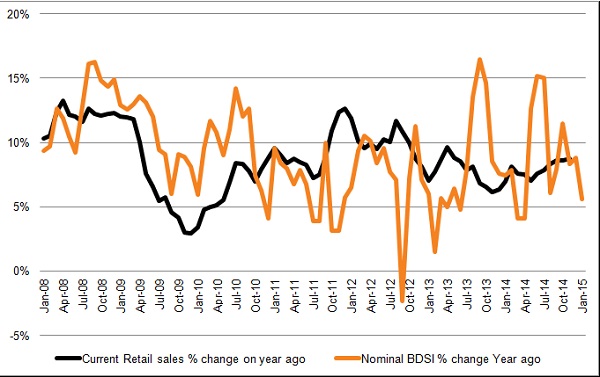
In January disposable salaries increased with 5.6% in the last year. The 5.6% increase over the year indicates once again that those in formal jobs are getting meaningful increases as the increases remain above estimated inflation. This strong showing of salaries paid into bank accounts via the South African payment system corresponds with personal income tax collected which increased with 20% in December 2014 compared to the same month in 2013 while average disposable salaries increased by 8.8% over the same period.
This also means that after taking inflation into account take home pay rose with some 0.6% over the last year. With the decline in petrol prices we expect retail sales and other consumer orientated sales to show growth in the coming months.
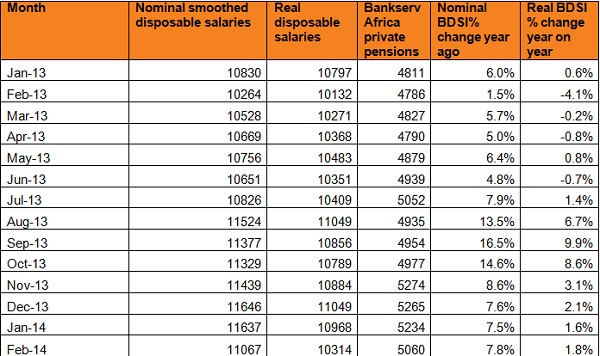
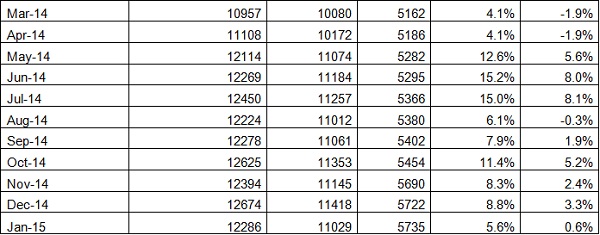
The BankservAfrica Disposable Salary Index shows that the average banked salary for January 2015 was R12 286 for the month compared to R11 637 January 2014. As usual the January salary was less than the Average for December as bonus payments showed the December average salary as R12 674.
The last five months showed positive real increases (after adjusted for inflation) at an average of 2.7%. This strong showing in recent times of disposable salaries almost certainly shows that the income side of the labour market remains fairly strong and that those in formal jobs continue to improve their lot.
Graph 1: Retail sales and disposable salary changes
The share of employees receiving over R10 00 per month increases
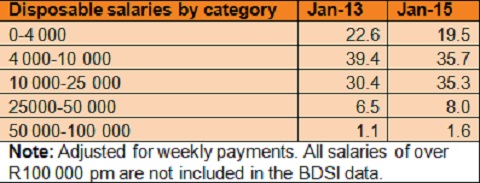
The rise in salaries over the last two years can also be expressed by the number of accounts or people receiving a take-home salary as a percentage of the total. There has been 3.1% drop in the lowest category of those who get less than R4000 a month in their bank accounts. This surely indicates that far less people now bank less than R4000 per month from their employment. In actual numbers the decline is 12.8% since January 2013 in this category.
Table 1: Share of accounts receiving disposable salaries by broad category via the BankservAfrica payment system
Source: BankservAfrica and Economists dotcoza
The 2nd lowest category of accounts who receive between R4000 and R10 000 in their bank accounts has also declined from 39.4% to 35.7%. In this category the actual number of accounts is now just under 1,065 million a decrease of 8.6% since January 2013.
Combined those getting a take-home pay of less than R10 000 per month has dropped from 62% to 55.2% of the total accounts that are marked as salary payments in the BankservAfrica system. The total number of salary payments has remained fairly static year on year and the proportion of accounts receiving higher salary amounts has increased indicating that people have moved from the lower disposable salary bands into higher bands.
The salary category with the highest growth in share of accounts is the R10 000 to R25 000 category which increased from 30.4% to 35.3% and an increase of 4.9% in employee market share. The two highest categories also saw increases in their share of accounts. The R25 000 to R50 000 saw an increase of 1.5% in accounts while the R50 000 to R100 000 category saw a 0.5% increase in the share of accounts or employees.
There may be other reasons for the decline in the lower categories and movement into higher categories other than salary increases, such as the decline in garnishee orders issued by South African courts, but taking both BankservAfrica payment system data and tax collection into account it seems that the main driver of the changes would be salary increases.
The number of accounts in January was 3 006 172 which was down from December 2014 which had 3 402 982. However in December there are also usually extra employees in some sectors mostly to help in the busy Christmas season as well as to help finish projects before year end.
Private Pensions increased at a brisk pace in January
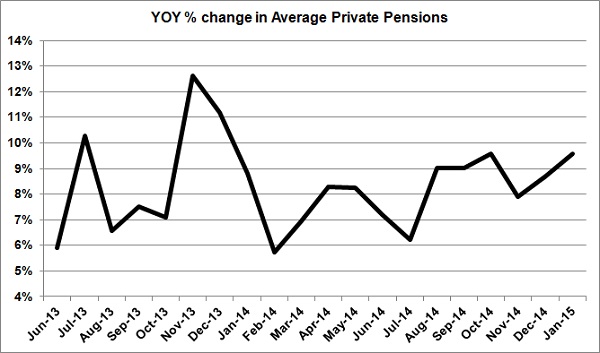
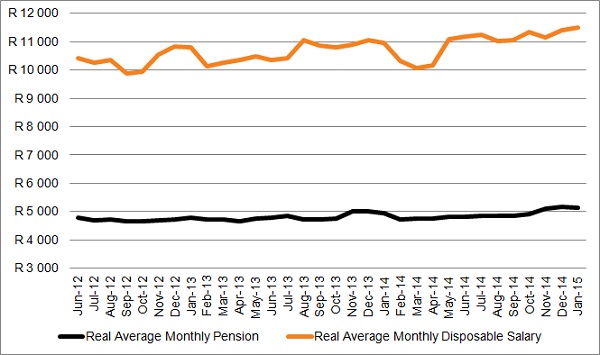
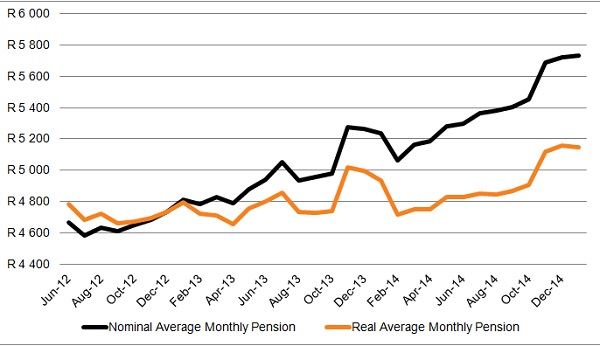
BankservAfrica Private Pension Index the only private pension indicator in South Africa increased with 9.6% on a year ago basis to R5 735 per month. The average pension was but 46.7% of the average salary for January but that was up from 45.2% as salaries declined on seasonal factors in January while pensions showed a R13 increase!
The real increase for the average private pension was estimated to be around 4.5% which indicates that the average pensioner is keeping up with inflation. This is most likely due to a very good investment performance by South African retirement funds from increasing assets such as equities and commercial property.
The median or typical private pension had a substantial increase as well at 9.9% and stood at R3 834 it’s highest ever level.
Bucking the good news on pensions is the fact that only 47% of all private pensioners receive a pension of more than R4 000 but this is up from 43.2% in January 2014. The number of private pensioners receiving more than R10 000 in their back accounts was 15.8% of the total in January 2015 which is nearly 5% up from 10.8% which was the case in January 2013.
There was also a decrease in the number of private pension payments on the BankservAfrica payment system from 641 148 in January 2014 to 620 650 in January 2015. The reason for the decrease is not known but the number of pensioners does seem to stay fairly constant between 615 000 and 649 000 every month.
Graph 1: Percentage change in the average private pension:
Source: BankservAfrica and Economists dotcoza
Graph 2: Disposable salary and banked private pension compared
Source: BankservAfrica and Economists dotcoza
Table of actual BDSI and BPPI numbers
Source: BankservAfrica and Economists dotcoza
Graph 3: Average nominal and real private pension
Source: BankservAfrica and Economists dotcoza

