

Poor sleep is one of the biggest blind spots in road safety, Discovery Insure research reveals
Poor sleep may be one of the biggest blind spots in road safety, according to research from Discovery Insure. Drawing on four years of driving and sleep data, the research shows that missing sleep over several consecutive nights is one of the strongest predictors of motor vehicle accident risk, highlighting an often-overlooked factor that could help prevent vehicle accidents.
The research links four years of sleep data from more than 10,000 Discovery Insure drivers with their driving behaviour and accident outcomes, making it one of the largest studies of its kind conducted in South Africa.
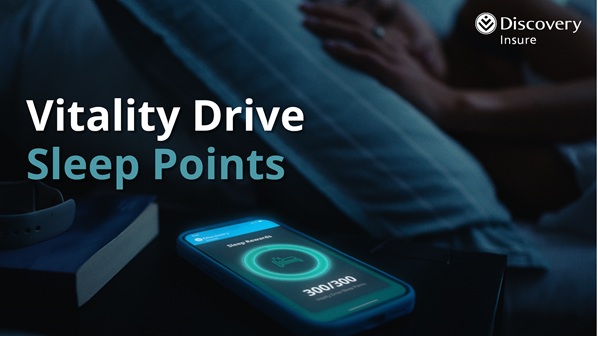
The findings led to the launch of Vitality Drive Sleep Points, a new feature within the Vitality Drive programme that rewards healthier sleep habits as part of Discovery Insure’s commitment to help make South African roads safer.
“Breathalysers can detect alcohol impairment, a visible and well-understood risk factor for accidents. Driver fatigue, by contrast, has until now been largely invisible,” says Robert Attwell, CEO of Discovery Insure.
“Sleep affects concentration, reaction time and decision making, all of which directly influence driving behaviour and outcomes. Our research suggests that poor sleep is up to five times more predictive of motor vehicle accident risk than traditional insurance risk factors considered in isolation. That points to a significant blind spot in how driving risk has traditionally been understood, both locally and globally.”
Sleep debt is a powerful driver of accidents
One of the clearest findings is that it’s not just one night of poor sleep that matters. Missing sleep over several consecutive nights – known as sleep debt – has an even greater impact on accident risk.
Nearly 30% of Discovery Insure drivers accumulate some level of sleep debt while driving, with around half of sleep’s overall impact on accident risk linked to chronic poor sleep rather than one isolated night.
The research also shows that this risk can change quickly. Drivers who maintain less than one hour of sleep debt over three consecutive nights have up to a 36% lower accident risk than those carrying five or more hours of sleep debt over the same period.
Discovery’s research also found that:
• Drivers who regularly get seven to eight hours of sleep are around 32% less likely to be involved in an accident than those who sleep too little.
• Drivers who go to bed within roughly one hour of their ideal bedtime each night are up to 36% less likely to have an accident than those with irregular sleep patterns.
• Drivers who get adequate Rapid Eye Movement (REM) sleep experience around a 14% lower accident risk.
Tired driving deserves the same attention as drinking and driving
Despite growing evidence, many people still underestimate the dangers of driving while tired.
A 2024 survey found that almost 90% of adults would avoid driving when they’d had a few drinks, but only 50% said they’d do the same when they’d had poor sleep.
Research also shows that being awake for more than 16 hours can impair driving as much as being at or above South Africa’s legal alcohol limit (0.05% blood alcohol).
Globally, road traffic crashes claim approximately 1.19 million lives each year, with research suggesting that driver fatigue contributes to around one in five road accidents. In South Africa alone, road crashes cost the economy an estimated R205 billion in 2023, equivalent to around 2.7% of GDP.
“For years, road safety efforts have rightly focused on risks like speeding, distracted driving and drinking and driving,” says Attwell. “Our research suggests tired driving deserves the same level of public awareness because the consequences can be just as severe.”
Introducing Vitality Drive Sleep Points
The research has led Discovery Insure to introduce Vitality Drive Sleep Points, making it the first short-term insurer in South Africa to reward healthier sleep habits as part of a behaviour-based driving programme.
Since June 2026, clients who activate their Vitality Sleep Score and track their sleep with a compatible wearable device can earn additional Vitality Drive points for maintaining consistent, healthy sleep patterns.
The feature builds on Vitality Drive’s longstanding approach of encouraging safer behaviour through positive incentives.
“Since 2011, Vitality Drive has used behavioural science and telematics to help drivers reduce their risk on the road, contributing to an 80% reduction in accident fatality rates among our best drivers,” says Attwell. “Adding sleep is a natural next step because it addresses a risk factor that has always existed but has been difficult to measure until now.”
Road safety starts the night before
“Every safer journey begins the night before,” concludes Attwell. “If we can help more South Africans develop healthier sleep habits, we can help more people arrive safely, reduce the burden on families and contribute to safer roads for everyone.”


