

Decline in take-home pay suffers real decline
Last month there was a noticeable decline in the take-home pay as measured by the BDSI.
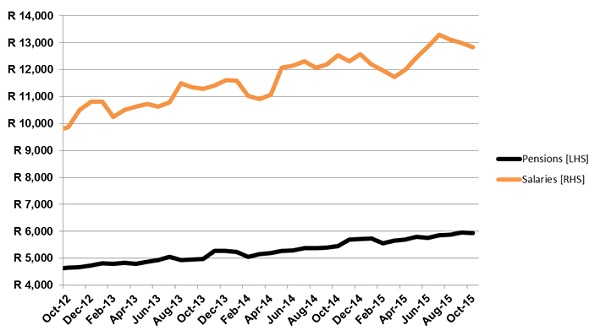
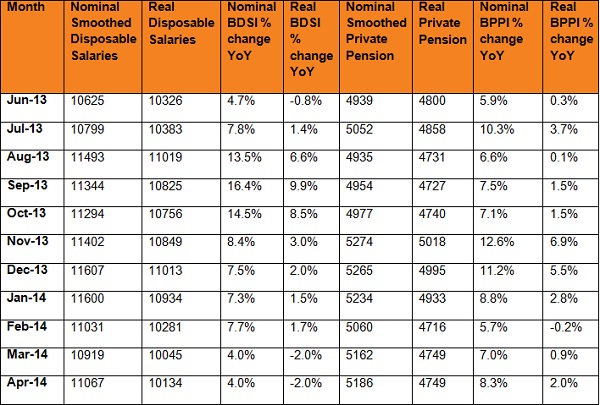
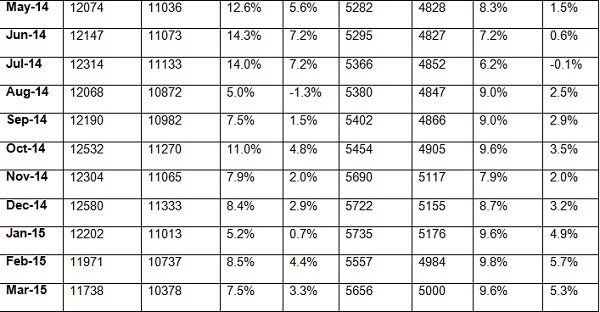
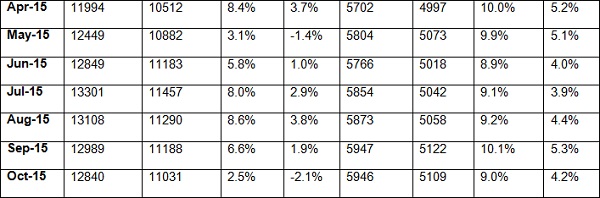
The BankservAfrica Disposable Salary Index (BDSI), suffered a decline of 2.1% in October 2015, after taking inflation into account. With inflation at 4.7%, the nominal increase of 2.5% in October 2015 over October in 2014 means that there was a decline of 2.1% in the formal sector salaries, as paid into people’s bank accounts.
Considering the last four years of disposable salary data that is available this is an unusual occurrence, as this is only the 2nd time this year that disposable salaries have declined after inflation is taken into account.
Unusual and unfortunate reasons for low increase
Higher than usual payments obtained in October 2014 as back pay from wage adjustments – for example with the metal industry - is partly responsible for this discrepancy, meaning that the base for the measurement is unusually high.
But weak economic conditions may also be having an impact as the salary of the person in the middle (also referred to as the ‘typical salary’) also had a smaller than usual increase of 4.9% or just 0.3% above the inflation rate for October when compared to last year.
The average salary was R12 840 in October, indicating a decline of R150 compared to last month. This is likely a reflection that many people are not able to earn the extras in their salary such as overtime, work related bonuses or making targets for extra commissions.
Another consideration is that the back payments of local government salaries are now out of the system so there is a normalisation of salaries, and therefore no exceptions in the data are anticipated for the next few months.
Increase in number of people earning well
Interestingly, the number of employees receiving over R50 000 in their bank accounts has more than doubled from 22 305 on average from August to October 2011, to 50 524 between August and October 2015 (excluding those earning over R100 000 plus a month).
The number of people receiving salaries of more than R50 000 but less than R100 000 per month has increased from 0.8% to 1.6% of the total people earning salaries in the dataset. While this is only take-home pay as paid via the South African Payment system, it shows that - despite income tax increases, and above inflation medical insurance increases - the number of people taking home over R600 000 per year has doubled.
Similarly, the number of people who take home over R300 000 but less than R600 000 per year has increased from 5% to 8.4% of the total number of earners, while those taking home between R120 000 and R300 000 has increased from 26% to 38.4%.
Those with a disposable income between R120 000 and R1 200 000 per year has increased from 31.7% of the total in October 2011 to 48.4% in October 2015. This represents a 61% increase over four years and far exceeds inflation.
This obliviously has resulted in higher tax collections as well as higher retail sales and explains why the upmarket retail figures continue to do well. The increase in the number of people earning over R120 000 indicates that despite slow economic growth the upper middle class is still increasing its ranks fairly well.
Pension increases still beat inflation
In contrast to the salaries this month, pensions continued to increase well above the inflation rate in October 2015, with the average disposable private pension increasing 9% on a year ago.
The average pension was R5 946 in October compared to R5 947 in September. The average private pensions increased by 4.2% in real terms. The pensioner in the middle or the typical pension increased by 9.3% in nominal terms to R3 957 per month.
Graph 1: BDSI and BPPI compared in nominal terms
Source: BankservAfrica and Economists dotcoza
Table 2: Summary of salary and pension information
Source: BankservAfrica and Economist dotcoza
Definitions:
Nominal: Current salaries and pensions
Real: Inflation adjusted salaries and pensions
Note: There were about 640 000 pension accounts that were paid via the BankservAfrica system this month and an estimated 3 120 000 monthly equivalent salary cheques. Pensions paid make up 80% of the figures that the retirement industry reported to the FSB. The salary payments are about one third of the formal sector workforce (excluding agriculture) as covered by the Quarterly Employment Survey of Statistics South Africa.

