

The resilient mindset, let us not fail to save
As we consider the importance of saving, whether for the short, medium or long term, and take into account the current economic impacts that have reduced our disposable income through the cycle of interest rate hikes, I have to ask myself are we failing to save due to the economic situation or are we really just not good savers, and if so, why.
As South Africans, apart from our sense of humour we are a resilient Nation of individuals. When it comes to saving and saving in a tough economic cycle, we must remain committed, flexible, in control and purposeful. The resilient mindset speaks to our ability to navigate emotions, biases, and tradeoffs in our pursuit of creating future wealth.
Failing to save during tough economic cycles
How do we save during the current economic cycle? Firstly, we are all experiencing pressure on our ability to save, and my continued approach to this conundrum is not to fail to save as the impacts of not saving for that unexpected and unplanned event or the longer-term consequences for our retirement planning cannot be underestimated.
The tradeoff in the current high interest rate cycle should not be on our savings plan, but rather on making changes to our buying and spending habits during this time – how many streaming options do we need to subscribe to, what can we cut back on and where can we stop spending in order to meet our saving commitments?
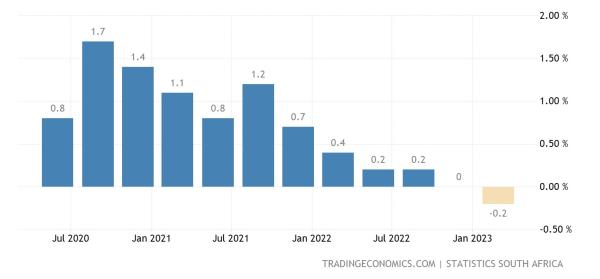
The savings rates over the quarter periods July 2020 to end January 2023, demonstrate the impact of our inflationary and interest environment on our actual savings percentage as the South African population. (Table: https://tradingeconomics.com/south-africa/personal-savings)
Source: Morningstar, 30 June 2023
Looking at it from another perspective, without planned savings for an unexpected event we are likely to rely on loans, family, or extended credit facilities.
Behavioural biases
If we consider the concept of failing to save through a behavioural lens, we can identify our very own characteristics and biases towards savings, which may lead to a low saving rate.
Self-control or Present bias
We inherently have a self-control or present bias, where we prioritise our current needs, spending and purchases over our long-term goals. Considering the fast-paced world that we live in, instant gratification is made ever easier through the ease of online shopping, where we catch ourselves solving for the moment rather than the medium and long-term savings goals we wish to achieve.
Overconfidence bias
The overconfidence bias sees us making decisions based on our own judgement of a situation, therefore in the context of saving, we are confident that if we start later, we will make up returns that will help us meet our savings goals.
Status quo bias
Status quo bias refers to our inability to change our behaviour and decision-making unless there is a clear incentive to make a change. When considering this in conjunction with self-control or present bias, we respond by keeping our decisions as they are.
Herd bias
Social conforming can lead to herd bias, this refers to our listening and following groups of people on decision making. Consider for a moment: a group of people driving the right car, living at the right address, and leading the lifestyle, we may be drawn into this at the detriment of our own savings culture. Alternatively, the action of the group lends itself to a specific number – you only need to replace 75% of your final monthly income in retirement. You plan your savings accordingly. Is this 75% the right number?
How do you become a better saver?
When considering your needs, and your short-term to long-term goals, understanding just some of the biases that are well documented in behavioural economics and finance can lead to a changed decision-making process with improved outcomes for your personal plan.
Start now, stick to your plan, make the right tradeoffs that keep your plan on track and in place and save for the goals and lifestyle you want to achieve.


