

Dr Naledi Pandor issues urgent call for global unity to combat political instability at IFTRIP 2025
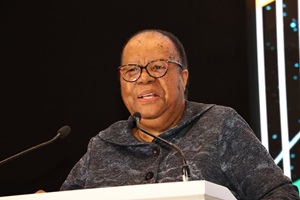
Dr Naledi Pandor
Dr. Naledi Pandor, former South African Minister of International Relations and Cooperation and current Chairperson of the Nelson Mandela Foundation, delivered a powerful keynote address at the International Forum of Terrorism Risk (Re)Insurance Pools (IFTRIP) 2025, hosted in Cape Town. During her address, Pandor discussed the growing risks associated with political instability and emphasised the importance of global cooperation in mitigating these challenges.
Dr Pandor opened her speech by welcoming attendees to Cape Town, acknowledging the critical role the city plays as a hub for global discussion. With a light-hearted reference to the classic song "Ain’t No Stopping Us Now," she set the tone for a session focused on resilience and collaboration in addressing global challenges.
"We are facing a period of immense challenges," she remarked, underscoring the global volatility and unpredictability that has followed the Russian invasion of Ukraine, the lingering impacts of the COVID-19 pandemic, and rising political unrest worldwide. "This is a moment where we must ask: who is the adult in the room?"
Pandor urged the assembled leaders to take responsibility for fostering a more stable global environment. She emphasised that the world’s political landscape has shifted alarmingly, with growing instability and uncertainty now taking centre stage. "The world needs a more stable political and policy environment," she said, calling for clear-headed leadership that moves away from chaos and towards constructive solutions.
In her address, Pandor also reflected on the lessons learned from the July 2021 riots in South Africa, which underscored the importance of risk insurance in a volatile political climate. "In the aftermath, businesses that had invested in insurance were able to receive assistance and begin the recovery process after the terrible destruction that followed," she said.
Pandor recalled the early discussions about the creation of Sasria, the South African Special Risk Insurance Association, which was seen as a response to South Africa’s apartheid past. Despite initial doubts regarding its relevance in a democratic South Africa, the 2021 riots underscored the necessity of institutions like Sasria, which helped protect businesses from the financial fallout of political violence.
With the lessons of 2021, we realised the wisdom of leaving things as they were, ensuring stability when it was needed most," Pandor said, stressing that risk insurance, particularly in politically unstable environments, plays a crucial role in maintaining societal stability.
Turning to the African context, Pandor noted that despite decades of economic growth, political instability is resurfacing. In recent years, Africa has experienced military coups in countries such as Sudan, along with increasing political violence and governance crises. Pandor pointed out that between 2021 and 2022, five military coups occurred across the continent, worsening the already fragile political environment.
The political violence we are witnessing is not just about instability but a fundamental challenge to governance and the rule of law," she said, calling attention to the crisis in leadership across several African nations. Pandor argued that these developments must serve as a wake-up call for insurers and business leaders to rethink how they assess political risk and manage potential fallout from such instability.
Pandor also discussed the concept of "human security," emphasising that true stability goes beyond political governance and extends to the well-being of citizens. "Human security is about more than just protection; it’s about ensuring that basic needs are met so communities can thrive," she said. According to Pandor, addressing human security is essential to preventing extremism and violence, which often arise from unmet needs such as access to clean water, land, healthcare, and education.
She highlighted that climate change, which has displaced millions across Africa, increasingly serves as a source of conflict. "When displaced populations meet communities already fighting for resources, economic competition is often behind the violence," Pandor explained. She stressed the importance of addressing these underlying causes of conflict to mitigate the social and political risks exacerbated by environmental changes.
In a pointed remark, Pandor noted that many global institutions, including the G20 and the BRICS group, have not adequately addressed the financial implications of political instability. "Discussions at global summits often focus on bureaucratic responses to crises rather than the practical steps needed to address financial fallout," she observed.
Pandor urged business leaders and the private sector to step up and take a more active role in addressing political risk and promoting stability. "You have the access, influence, and responsibility to engage with global leaders and policymakers," she said, urging them to use their positions to advocate for responsible governance and to work towards peace, security, and development.
As IFTRIP 2025 came to a close, Pandor concluded her speech with a call to action for all sectors. "What we need now is a united global effort to reduce risks and ensure the security of all people, particularly in areas that have been neglected," she urged. She called for greater attention to environmental sustainability, the development of new African-led risk insurance companies, and investment in risk preparedness for the continent.
Pandor also stressed the importance of focusing on human security in vulnerable regions, especially in the wake of climate-induced displacement and economic inequality. "The private sector must collaborate with governments and multilateral institutions to mitigate these growing risks," she said. Dr. Pandor’s keynote address at IFTRIP 2025 highlighted the complex and interconnected nature of global political instability and the need for a more proactive, collaborative approach to risk management.
With an increasing number of countries grappling with political violence, social unrest, and environmental challenges, South Africa’s experience has provided valuable lessons about the critical role that risk insurance plays in maintaining stability. As global business leaders continue their deliberations, Pandor’s call to action for better coordination, investment in human security, and enhanced political risk management offers a roadmap for creating a more resilient and stable global environment.

