

Gauteng’s dry winter poses the highest risk for fires
Lightstone, provider of comprehensive data, analytics and systems on automotive, property and business assets, have revealed that out of the five main provinces in South Africa, Gauteng has the highest number of fire risk days during June, July and August between the years of 2012 to 2014.
According to Sara Winstone at Lightstone, a fire risk day is determined by whether a fire hotspot has been recorded that day. Gauteng has seen an average of 30.5 fire risk days in the month of August over the last 2 years.”
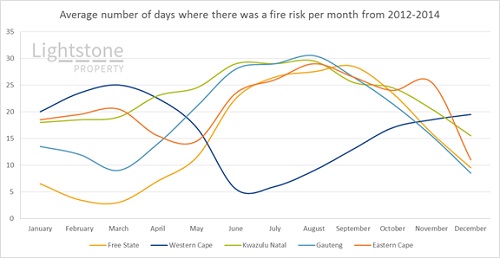
“The winter months in Gauteng are very dry, leaving the velds and fields easily susceptible to fire. Some of the areas where there is more open veld such as Muldersdrift are flagged as a higher fire risk than in the urban areas,” explains Winstone.
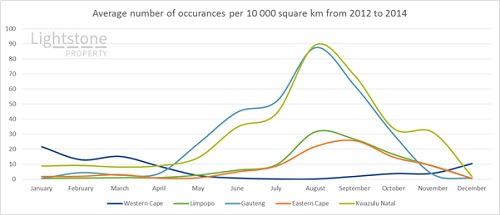
The average number of fire occurrences per 10 000 square km in Gauteng are relatively constant and low for summer to mid-autumn. It steadily rises throughout the end of autumn and reaches a peak in August of 88 occurrences per 10 000 square km in Gauteng. From here the number of occurrences decreases throughout spring and reaches a minimum value of 1 occurrence per 10 000 square km in December.
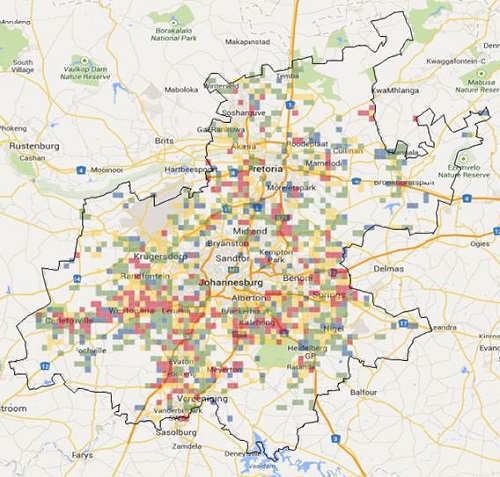
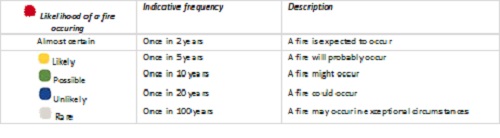
Likelihood of a specific fire risk scenario coming to reality
“When analysing a sample of fire claims lodged over a 12 month period, a large majority of those occurred in Gauteng. Although not as frequent as some of the other perils, the average fire claim size was almost 5 times higher than other building related claims due to its annihilating nature.”
“It is critical for consumers and insurance companies to understand the partiality for the occurrence of various risks such as fires during the drier months, in order to properly assess and mitigate against them. With accurate data and analysis provided by Lightstone, insurance companies can access individual reports on properties detailing a variety of information on not only the fire risk, but also the typical weather and other risk related conditions that affect the property,” concludes Winstone.


