

Active vs Passive – Is the debate over?
Active fund managers will tell you that the debate is over. Passive fund managers will tell you it is not.
The debate is still fully alive and well, and we are no closer to a resolution than we were since the debate began.
Don’t try to beat the market
In 1975, John Bogle - the founder of Vanguard, the world’s largest provider of unit trusts and ETFs - realised that the cost of active investing was one of the main reasons it did not do as well as the market itself. In fact, Bogle discovered that the longer the timeframe, the more active investing would fall behind the market.
Bogle came up with a revolutionary idea: Do not try to beat the market. Instead, invent a fund that delivers the performance of the market, but without active management and its associated costs.
In other words, use the market to grow your wealth and cut the costs of investing to the bone. ETFs are now one of the most popular and fastest growing investment products in the world.
Don’t look for the needle, buy the haystack
Active investing is like looking for needles in the haystack. You need skill to pick the winners all of the time. Passive investing would be like owning the entire haystack, and thus being exposed to the profits of all of the needles all the time.
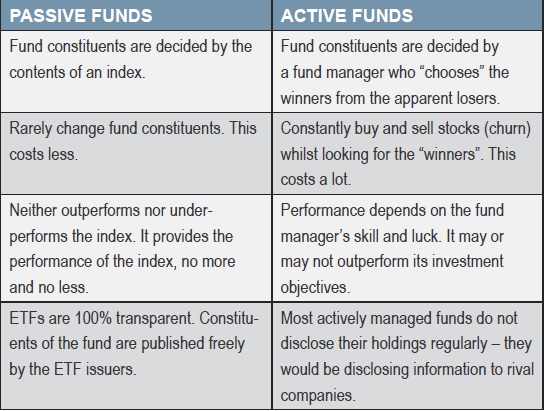
It’s hard to beat a passive fund
Each year, academic studies comparing the returns of actively managed funds vs passive funds show that in the aggregate, actively managed funds do not generally deliver returns higher than their passive counterparts.
Consider the table below.
Percentage of active funds beating the index up to December 2015
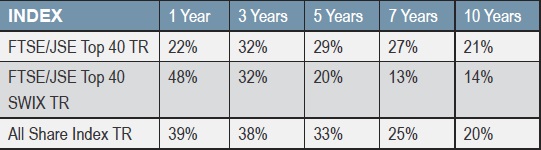
Source: Profile Data 2016. (General equity fund classification).
Simply put, if you had invested in a Top 40 index over the last five years you would have beat 71% of active managers whose mandate it was to simply beat the market.
Exchange Traded Funds do not try to do better than the market, but because of their lower costs they often end up beating the funds that try.
Passive costs less
Consider the analysis below over a one year period up to 31 December 2015.
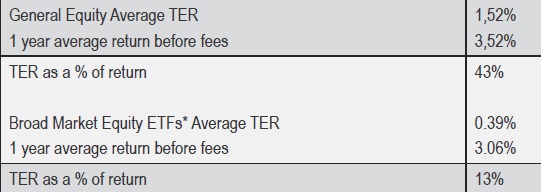
Source: Profile Data 2016
Despite ETFs performing slightly less than the active funds, their percentage of costs expressed against their returns are remarkably lower than their active counterparts.
Keep it simple
You may say that it is possible to beat the market, and you may be right in some cases, but the odds are heavily stacked against you.
If you are looking for a simple low cost way to grow your wealth over the long term, ETFs are the answer.
