

Stuck in a low gear
The term “the sick man of Europe” was first used to refer to the faltering Ottoman Empire in the mid-19th century, possibly by the Russian Tsar Nicholas. Since then, various countries and regions have held this unfortunate title while both the Russian and Ottoman empires have long disappeared.
In the 1960s and 1970s, the dubious honour fell to the UK, which having also lost its empire, was struggling to integrate into the larger European economy. It suffered from disruptive strikes and cost-of-living shocks and required an International Monetary Fund (IMF) bailout in 1976.
The IMF also had to get involved in the early 2010s, when Ireland and Greece were bailed out, the latter as part of the largest debt restructuring in the world up to that point. Italy, Portugal and Spain were also lumped into this unfortunate grouping, and all suffered a second deep contraction, coming soon after the 2008 global financial crisis. The Greek economy is still 20% smaller than in early 2008, while Italy has only barely returned to its pre-2008 level of real GDP.
Recently, the Southern European economies are doing much better, partly because of the post-Covid tourism boom. In fact, the crowds have been so big that there is increasing talk of actively restricting tourism in places.
Today, it is Germany’s turn to be the sick man of Europe. This is ironic because when its economy outperformed the Southern Europeans in the early 2010s, German politicians rarely held back in lecturing them on fiscal and economic policy.
Schadenfreude
While leaders in Greece, Spain and Portugal are no doubt enjoying a spot of quiet schadenfreude, weakness in Germany drags down growth for the broader European economy. The IMF’s latest forecasts suggest that Germany will not grow this year, meaning no rebound from 2023’s 0.7% decline. This implies that the German economy will end this year barely any larger than on the eve of the pandemic.
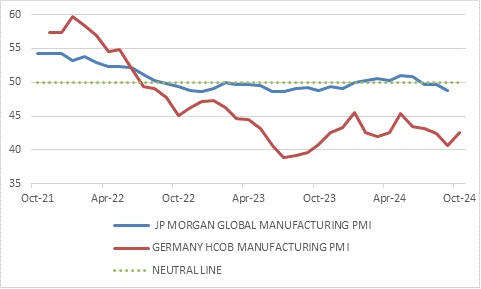
Chart 1: Manufacturing Purchasing Managers’ Indices
Source: LSEG Datastream
In any country, economic success or failure is a complex matter but there are a few key issues. Germany’s economy is skewed towards manufacturing – it is an industrial powerhouse – but globally manufacturing is under pressure. Germany was also too dependent on cheap Russian pipeline gas from which it is now largely cut off. Even though the energy crisis of 2022 has mostly passed, German manufacturing volumes have not recovered. Some production might be lost for good, as it is not globally competitive at current energy costs. BASF, the largest chemicals company in Europe, has for instance announced that it is moving 11 plants from Germany to the US and China.
Germany has also scored a few own goals, including the decision to shut nuclear plants in the wake of the 2011 Fukushima disaster in Japan, as well as the reluctance to use the period of negative interest rates between 2015 and 2021 to borrow and upgrade its increasingly creaky infrastructure. To South African visitors, for instance, Germany’s railway system seems out of this world, but regular users are frustrated with consistent delays and cancellations.
Overexposure to the automotive industry is also a problem. Germany is synonymous with cars, particularly high-performance internal-combustion vehicles, where it has long been a dominant player. But the global auto industry is in the midst of a sea change. Not only are electric and hybrid vehicles becoming mainstream, but China has turned out to be a formidable competitor. Not only are Chinese motorists buying fewer German cars in favour of homegrown brands, but Chinese car companies are competing head-on with German marques in other countries. It now exports more vehicles than any other country, having overtaken Japan in the past year.
We see this on South African roads too, with several new Chinese brands recently introduced at very attractive price points.
There is another irony here, namely that China and Germany share an export-focused economic model that depresses domestic demand. Both countries run large surpluses with the rest of the world, though China’s is not as large relative to the size of its own economy as it used to be.
Click here to read more...


