

March Madness
Since 1939, the US college basketball season has culminated in an elimination tournament known as March Madness.
It is renowned and loved for producing major upsets, as a single nervous performance can send a top-ranked team crashing out of the competition, while an unfavoured team can defy expectations and win national adoration. For fans, predicting the outcome of the 67 games played over eight rounds is an annual tradition, though no one has ever managed this feat (the closest being 49 correct picks).
There are three reasons to draw this analogy in an investment newsletter. Firstly, the name neatly captures the absolute mayhem we’ve seen on financial markets over the last month. Secondly, in Gulf War III, if we may call it that, the underdog is outperforming the top seed. Thirdly, there is a lesson in the limits of prediction, whether you are a sports fan, military strategist or the Average Joe investor.
Market mayhem
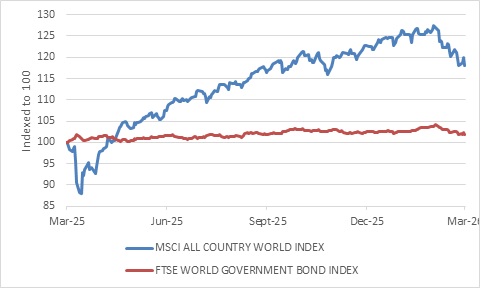
In terms of the market reaction, the numbers speak for themselves. March is not quite over yet, but the declines have been dramatic. Notably, from a global point of view, bonds and equities fell in tandem. It is understandable that equities, the riskier asset class, would suffer when there is global anxiety, but the bonds of rich countries normally rally in a crisis. The problem this time is that investors are worried about the inflation risks of higher oil prices, and potentially also about additional fiscal strain as governments potentially spend more on cushioning their populations from the energy shock and increase in defence outlays. The threat of central bank interest rate hikes also put pressure on bond markets, especially in Europe.
Chart 1: Global bonds and equities in US dollars
Source: LSEG Datastream
While the oil price has surged by almost 50% to the highest closing level since 2022 so far in March, gold fell by 14%. Though movements in the gold price are always a bit of a mystery, clearly some of the more speculative buyers have been spooked. It also makes sense that investors needing to raise cash would take profit from an investment that experienced spectacular gains over the previous year. This could include central banks needing to protect vulnerable currencies, as reported in the case of Türkiye. Other precious metals are also weaker, which, together with rising global risk aversion, saw the rand losing ground against hard currencies.
From the point of view of South African investors, global bonds and equities were largely unchanged in the month, thanks to the declining rand. This again highlights the value of portfolio diversification.
Click here to read more...


