

A tale of two markets
Excitement is building ahead of the stock exchange listings of Anthropic and SpaceX in the US.
Anthropic is expected to be valued at around $900 billion, while SpaceX could be valued at $1.7 trillion. An initial public offering of OpenAI is also expected to be around the corner with estimates of a market value likely to be near 13 figures. All three companies are currently still loss-making, but investors are lining up to buy into what they believe to be substantial future profitability.
Companies typically list to raise money and to make it easier for existing shareholders to sell some of their shares. An additional bonus is that it can raise a company’s profile.
When a company lists on a stock exchange, only a portion of its shares is available to the public. Most of the shares will still be held by existing shareholders. The market value of the company will then be determined by multiplying the share price on the relevant exchange by the total number of shares, publicly and privately held. In the case of SpaceX, only between 3% and 5% of the company’s shares will be offered to market, an unusually small amount that is nonetheless expected to raise a record-breaking $75 billion. It will also target retail investors to an unusually large degree.
Few and far
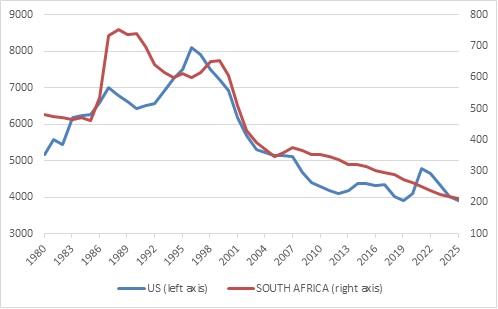
Part of the reason for the excitement is because such large listings are few and far between. Indeed, the global trend in recent years has been for fewer existing companies to maintain listings and fewer new companies to come to market (with India and China as exceptions).
This is largely due to the cost of maintaining a listing and the associated compliance and disclosure burden; the growth of private equity, which typically buys firms and de-lists them; and the availability of venture capital and other forms of funding that allow firms to grow without having to raise capital on a stock exchange.
Chart 1: Number of listed domestic companies
Source: World Bank
Buyback bonanza
Apart from the decline in the number of listed companies in the US market, the world’s largest by far, the number of outstanding shares has also fallen. This is because companies have actively repurchased their own shares. Federal Reserve data shown in Chart 2 illustrates that the gross issuance of new shares has basically been matched by repurchases since 2010. When mergers and acquisitions are also taken into account, net equity issuance was negative for most of this period, apart from the brief and largely speculative SPAC boom in 2021.
Click here to read more...


