

Plant now, harvest later: Spring is the perfect time for financial renewal
Spring is a season of renewal. It is a time when we feel more energised, optimistic, and ready for change. And if the first half of the year was tough financially, spring offers a chance to review, reset, and restart.
It is about taking control, even if things have not gone as planned. This is especially important in South Africa, where financial pressures remain high, and households are struggling to save. Just as we embrace spring cleaning to clear out physical clutter, we can apply the same mindset to our finances. Letting go of habits or expenses that no longer serve us, creates space for fresh financial goals and smarter money decisions. Here are a few tips to get started:
Sowing the seeds
Like any garden, financial growth does not happen overnight. It begins with small, manageable steps that build over time. Consider these actions:
• Set realistic savings goals: Start with an amount you can commit to, no matter how small. R100 a week or R300 a month may feel insignificant, but it creates momentum.
• Review your budget: Look closely at your income and expenses. Are there costs you can reduce or redirect toward savings?
• Track your spending: Awareness is the first step to change. Whether you use a budgeting app, your bank’s mobile tools, or a notebook, keep a record of where your money goes.
• Cut back one expense: Commit to reducing an unnecessary cost, such as fewer takeaway meals or cancelling a subscription you don’t use.
Let us look at practical examples:
• Thandi decided to save R200 a month. By cancelling a streaming service and tracking her spending, she built a first-year savings of R2 400.
• Sipho, after reviewing his budget, cut R500 from takeaway meals and ended up saving R6 000 in a year.
These examples show that even small, consistent actions can lead to meaningful financial growth over time. These may seem like small “seeds,” but they can grow into strong financial habits.
Killing the weeds
For many South Africans, debt remains a pressing concern, with families often spending more than they earn. According to the 2024 Truth About Money Report by (TITC), only 34% of South Africans save regularly. This challenge is further highlighted by the introduction of the Two-Pot Retirement System, which came into effect on 1 September 2024.
By 31 January 2025, data from SARS shows that more than 2.4 million South Africans had withdrawn a combined R43 billion from their retirement funds through the new savings pot to cover short-term needs. While this provides much-needed relief in the short run, it also raises concerns about long-term retirement security.
Just as weeds compete with healthy plants, financial “weeds” can choke progress. These include:
• Impulse spending that leaves you short by month-end.
• Unnecessary costs like unused subscriptions or memberships.
• High-interest debt that eats into income and prevents saving.
Removing these weeds takes discipline, but every adjustment, frees up space for financial stability.
Taking consistent care
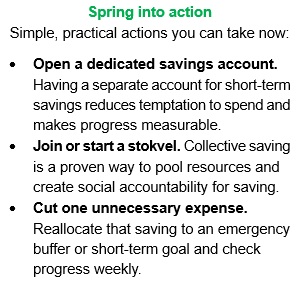
Consistency is what makes habits stick. Financial growth, like a garden requires regular care and collective saving may help you achieve this. According to the United Nations Secretary-General’s Special Advocate for Inclusive Finance for Development (UNSGSA) about 11 million South Africans belong to over 800 000 stokvels, collectively saving around R50 billion annually. This also includes digital stokvels, where members save money in formal institutions such as banks.
To stay consistent, start by:
• Checking your budget weekly. A five-minute review can prevent overspending.
• Educate yourself. Explore FSCA’s free resources at www.fscamymoney.co.za
• Save together.
Consistency does not mean perfection. It means showing up regularly, even when progress feels slow.
Celebrate small wins
It is easy to feel discouraged when long-term goals seem far away. That is why it is important to celebrate small achievements – they build confidence and keep you motivated. Research shows that among households earning between R25 000 and R58 000 per month, more than 45% have no emergency savings buffer (Daily Investor). This makes even the smallest financial win meaningful.
Preparing for the harvest
Simply sticking to your budget for two or three months in a row can strengthen your financial discipline, setting the stage for bigger achievements in the future. The real reward comes when today’s actions turn into tomorrow’s financial stability. That may mean building an emergency fund that covers three to six months of expenses, taking out insurance to protect yourself and your family, and contributing regularly to retirement savings.
For guidance and free learning tools, explore the FSCA’s MyMoney resources and learning series at fscamymoney.co.za

