Corporate overdue payments in China at high levels: 80% of corporates affected in 2014
Slower growth and increase in non-performing loans expected in 2015.
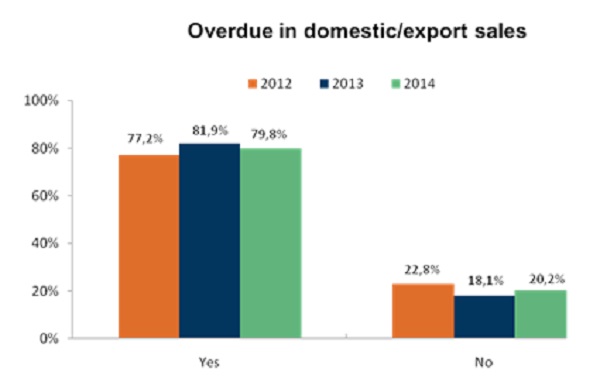
The latest Coface survey on corporate credit risk management in China, conducted in the fourth quarter of 2014, reveals that 8 out of 10 corporates experienced overdue payments in 2014.
Coface, the international credit insurer, forecasts that GDP growth will slow down to 7% in 2015 (vs 7.4% in 2014). Coface says that corporates still face the challenges of high leverage, high cost of financing and low profitability (driven by overcapacity). It is expected that non-payments will not improve in the short term.
Coface has been conducting the corporate credit management survey in China since 2003. The 2014 survey is the 12th edition. 882 companies from different sectors participated in the survey between October and November 2014.
Corporate overdues and Non-Performing Loans (NPL): The risk of rising non-payments should not be overlooked
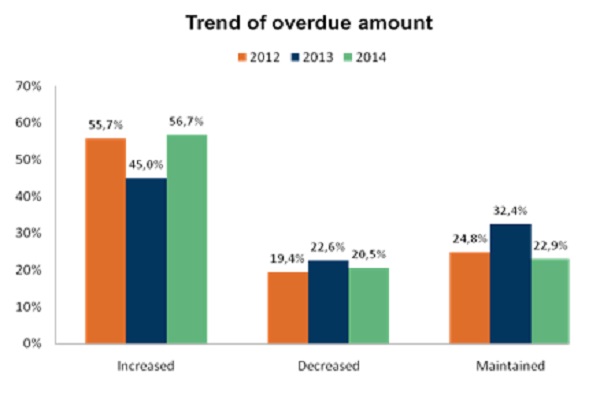
79.8% of the companies interviewed reported overdue accounts in 2014. “This is a slight improvement compared to 2013, although figures have remained at high levels over the last three years (Appendix 1). Among them, more than half of the companies (56.7%) experienced an increase in overdue amounts over the past year, up 11.7% compared to 2013 (Appendix 2).
In terms of the length of overdues, 19.6% of respondents reported that the average overdue period exceeded 90-days in 2014, while 17.8% had the same experience in 2013. The findings showed that, overall, payment behaviour in China remained very challenging in 2014,” Coface said.
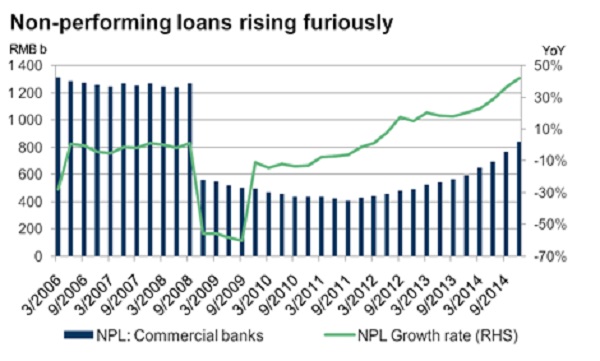
“This is in line with the non-performing loan (NPL) figures released by the China Banking Regulatory Commission. The NPL ratio rose to a multi-year high of 1.25%, as at the end of 2014. The risk of non-payments increasing should not be overlooked.”
“While the NPL figures are seen as lagging indicators, they show the tough situation the Chinese economy is facing,” said Rocky Tung, economist for the Asia-Pacific region. “NPLs soared by 42.3% YoY, as at the end of 2014, led by the substantial increase of 58.8% in substandard loans (Sub-standard loan: repayment on a loan is overdue by 91 to 180 days and no full-repayment can be made by the borrower, see Appendix 3). These trends show that risks are on the rise, involving both the real economy and the financial system.”
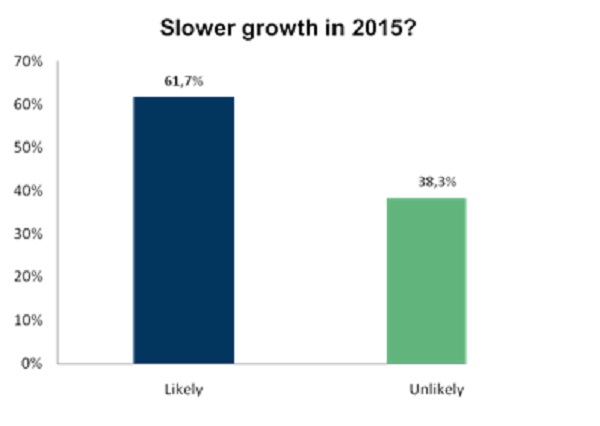
China is on pace to add over 13 million new jobs in 2015 and inflation is expected to stay low (Coface forecasts 2.2% YoY for 2015). The property market is showing early signs of stabilisation since the government removed purchase restrictions in all but five cities and the introduction of monetary easing measures (interest rate cuts in November 2014 and required reserve ratio reductions in February 2015). Coface’s 7% growth forecast is in line with the Chinese government’s rhetoric. This will not come as a surprise to corporates in China, as 61.7% of respondents believe that GDP growth will continue to slow down in 2015 (Appendix 4), said Coface.
Challenges faced by corporates under structural reform
At the same time, the real economy in China is facing rising challenges in three major areas: firstly, high leverage; secondly, high costs of financing and thirdly, low profitability driven by overcapacities in certain sectors. “Monetary easing measures are being introduced to smooth out the growth deceleration process. If additional low-cost funding is not delivered to the parties that need and deserve it, the main purposes of such monetary easing measures are unlikely to be achieved, and further concerns on rising credit pressure may be foreseen,” according to Coface.
“Non-traditional measures that could help ease the liquidity misallocation in the real economy – particularly for small-and-medium enterprises (SMEs) – are underway, but patience is needed with the structural and financial reforms. The approval of private-funded banks will serve the needs of SMEs, but the setup of these banks has taken some time following approval. More time is needed before fruitful results can be achieved in the medium-term,” said Mr Tung.
High risk sectors: chemicals, construction, paper-wood and metals
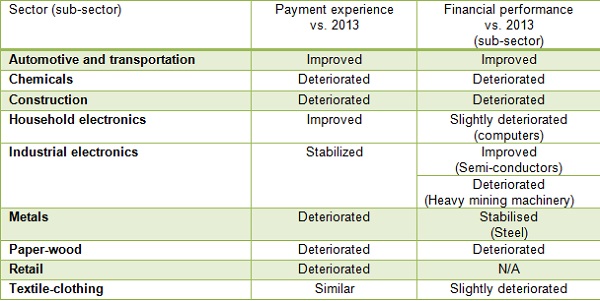
Short-term challenges are expected to continue in 2015 for businesses in China. Coface assessed nine major sectors in the Chinese economy, from the perspective of their payment experiences and financial performances.
Source: Coface
With high debt levels in China, there is a crucial need for the cost of financing to come down. The metals sector remains a source of concern. Showing signs of deterioration in both payment experience and financial performance, risks in chemicals, construction and the paper-wood sectors are on the rise.
Appendix 1
Appendix 2
Appendix 3
Source: Coface, CEIC data
Appendix 4